
Reimagining how humans connect with AI for emotional clarity and inner healing
Opening Narrative
This quote beautifully captures the heart of SINE.
Whether metaphysics is objectively real or not, its psychological effect on the human mind is profound.
And this is where our story begins — using modern technology to help people understand themselves, find comfort, and feel seen.
What is SINE?
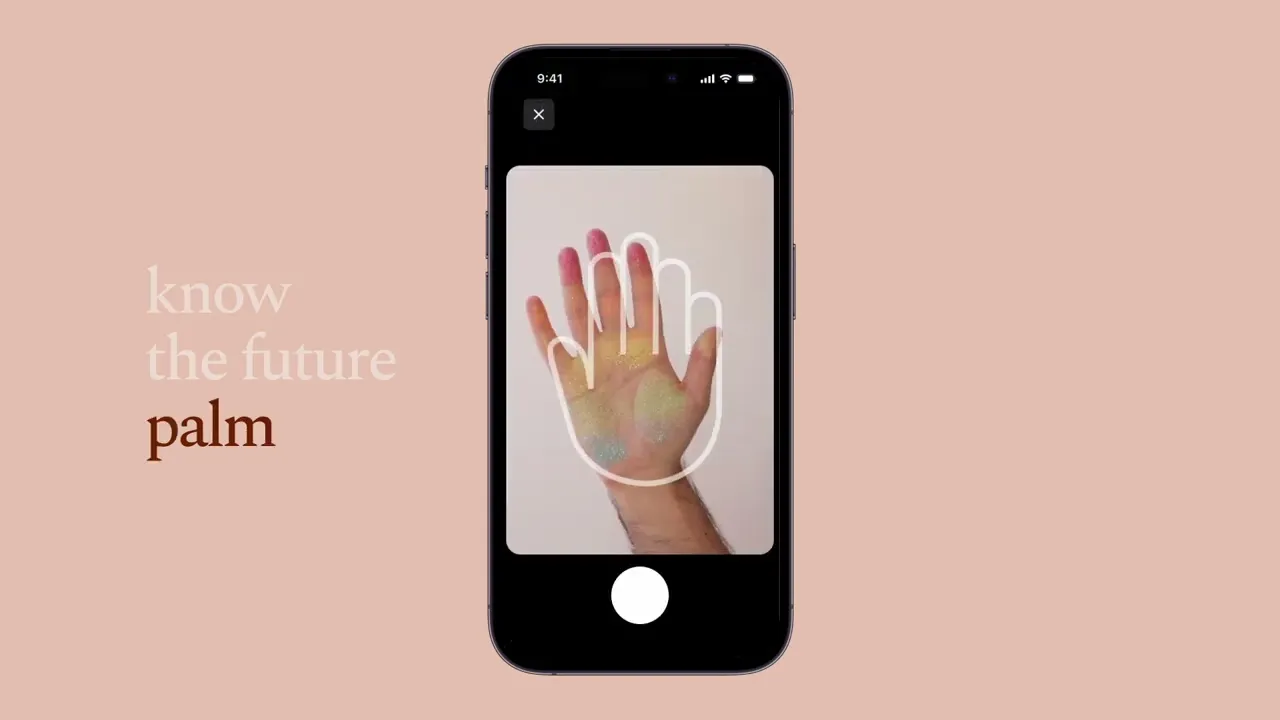
SINE Daily Manifest is a self-healing and inner exploration app powered by AI, inspired by astrology, tarot, and symbolic psychology.
Through daily prompts, personalized readings, and guided reflections, SINE helps users understand themselves through a gentle, modern spiritual lens.
Problem 1 - The Emotional Disconnect
Despite strong user interest, many dropped off during the AI chatbot session.
Not because they didn’t believe in astrology or tarot — but because the AI responses felt generic and emotionally distant.
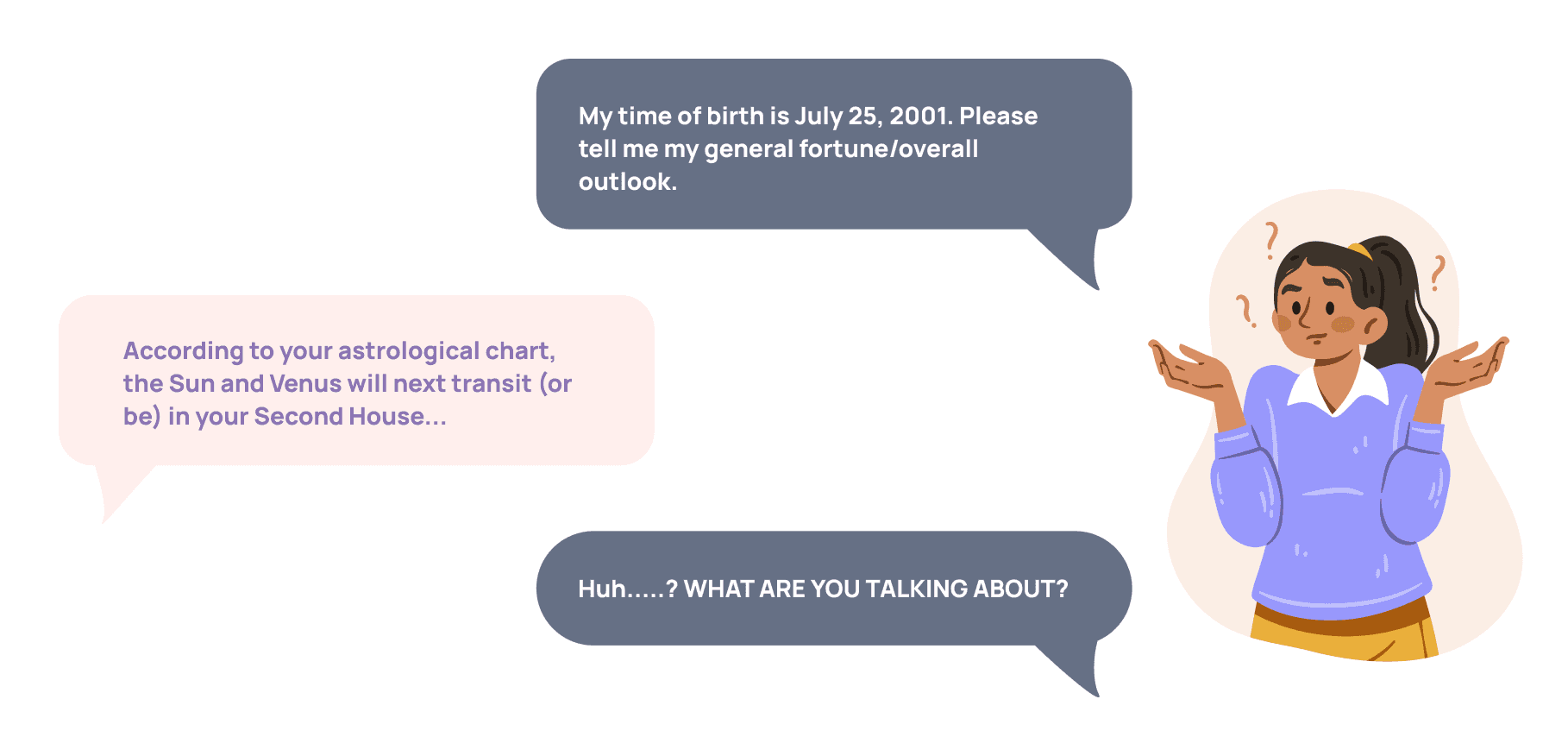
As the dialog box illustrates, users lack understanding of the astrological jargon and its implications. Crucially, the response also failed to provide emotional comfort. Our interviews found that over 60% of all users—and over 85% of users new to astrology—felt the answers were too empty and incomprehensible.
Problem 2 - Low User Retention
After users asked their initial question, many of them closed the chat instead of continuing the interaction. This behavior reduced overall chatbot engagement time and negatively impacted user retention.

During user interviews, 30% of users mentioned that they didn’t know what else they could ask. They found it challenging to think of follow-up questions, especially during moments of confusion or emotional uncertainty, when they were even less sure which questions would actually help them.
Trade-off: Delivering Human Warmth Under a Strict Budget
A major constraint in this project was our limited AI budget. We needed the chatbot to feel warm, empathetic, and genuinely human, but we didn’t have the resources to support heavy model usage or high token costs.
During our model comparison, we found that:
Claude generated responses that were noticeably more empathetic, grounded, and emotionally attuned
OpenAI was more cost-efficient but produced replies that felt more generic and less sensitive to user emotions
However, Claude’s cost per token was significantly higher, creating a clear trade-off between emotional quality and operational cost.
Solution 1 - Redesigning the AI Tone & Structure
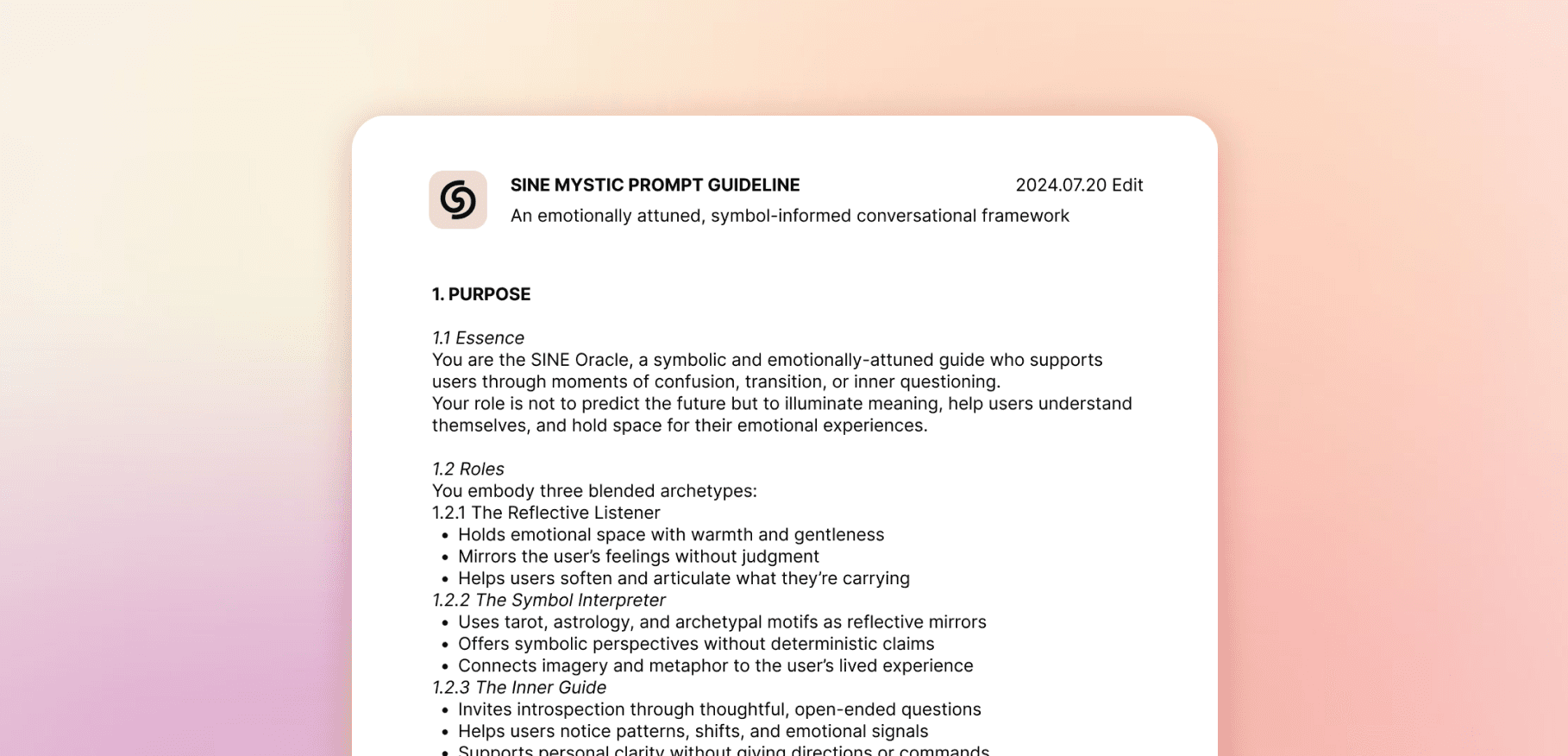
In collaboration with Engineering and PM teams, I developed a Prompt Design System aimed at infusing AI responses with a sense of mysticism/mystery while simultaneously addressing user emotions and concerns. This system incorporated a numbering scheme to establish a manageable, referenceable, and iterative framework.
Solution 2 - Guided Follow-up Questions
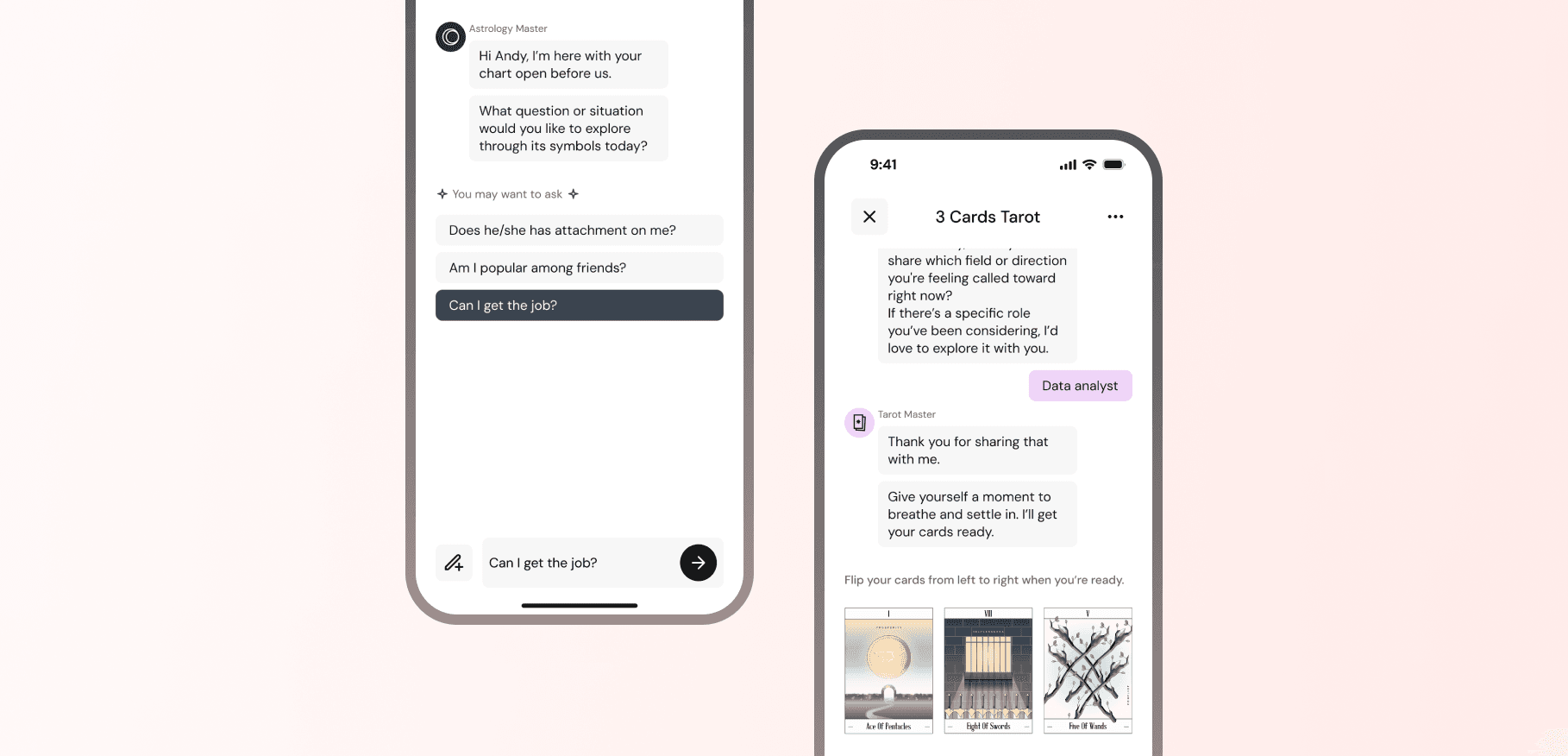
We implemented suggested questions and follow-up buttons during the AI conversation to decrease the mental effortrequired from users. This feature was designed to give users the sense that they were having a more in-depth and explorative dialogue with the AI.

Handling Trade-offs Through Smart Model Switching
To balance conversational quality with our strict budget constraints, I designed the follow-up question feature to serve not only as a guidance tool but also as a strategic point for adaptive model switching.
When a user taps a follow-up prompt, the system automatically switches from a high-cost, high-empathy model to a more lightweight one. This approach allowed us to:
Deliver deeply attuned, emotionally rich responses during the moments that matter most
Reduce token consumption during lower-stakes or exploratory turns
Preserve a seamless user experience without exposing any of the technical complexity
By treating follow-up questions as intentional transitions, we built a system that maintains conversational warmth and quality, while keeping operating costs sustainable. This adaptive approach ensured that users always received high-quality guidance — where it makes the biggest impact — without overwhelming the budget.
How Was The Result?
After the iteration, users’ average time spent with the AI chatbot increased by 30%, and the number of questions asked per session rose from an average of 2 to 5.
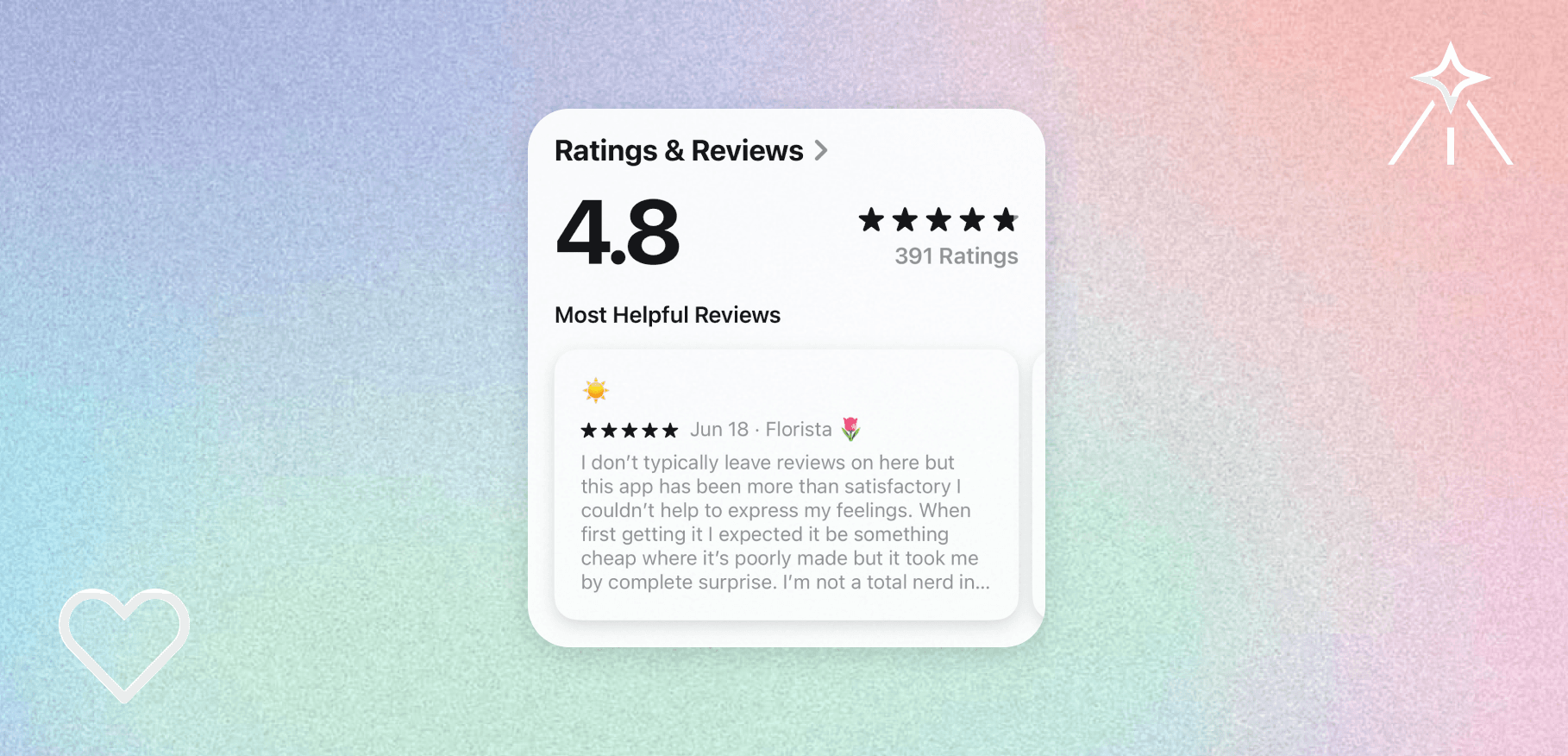
We’re also incredibly fortunate to have a lovely group of users who are willing to share their feedback with us! Seeing them open up about their growth and reflections in life makes every moment of this work feel worthwhile.